
Discovering Ciparanje Eco Edu Park Citrus Orchard: A Place Where Learning Grows
Author: Syifa Djuita Putri
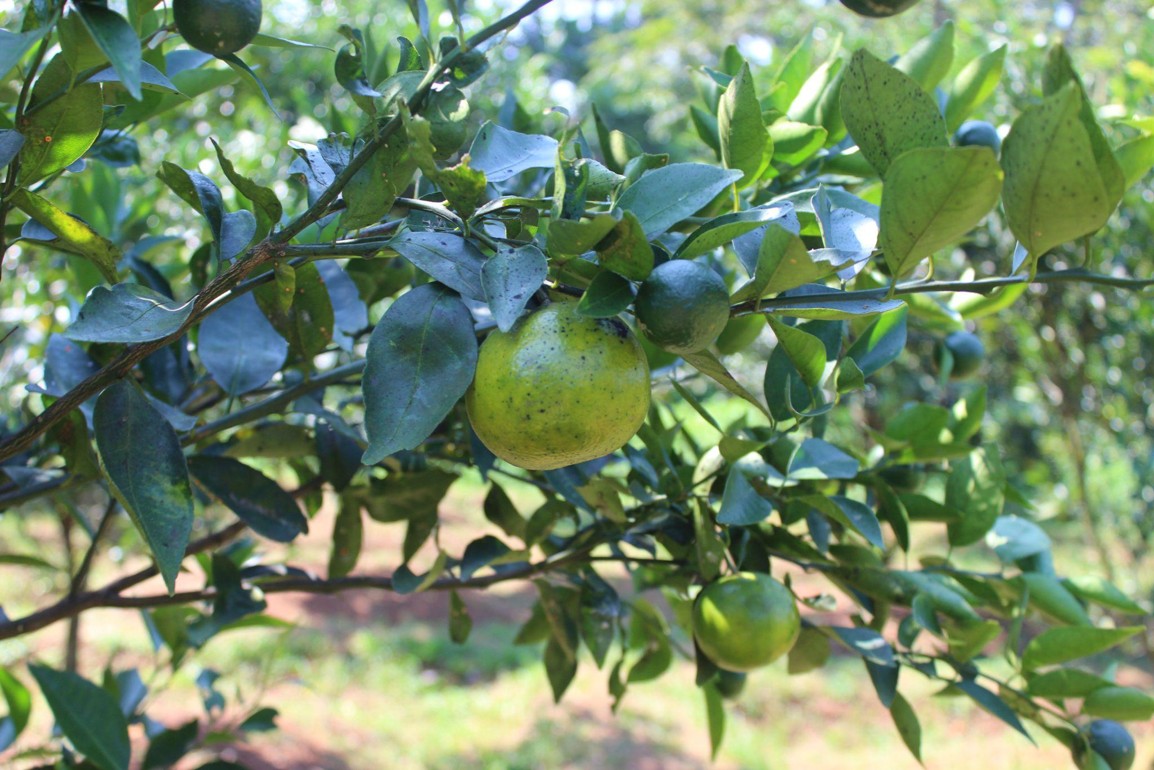
Jatinangor, June 26, 2026 — At the Ciparanje Experimental Farm of the Faculty of Agriculture, Universitas Padjadjaran, rows of citrus trees grow across a green and peaceful landscape. At first glance, it looks like any other fruit orchard. But beyond the thriving trees lies a place with a much greater purpose. The Ciparanje Eco Edu Park Citrus Orchard is not only a center for fruit cultivation but also a living classroom where education, research, and agricultural innovation come together, connecting lecturers, students, and the surrounding community.
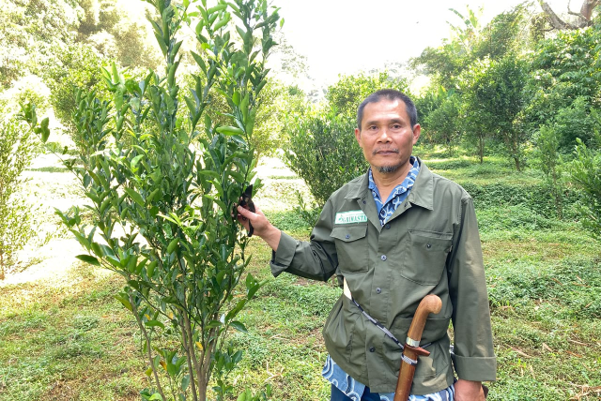
The orchard began with a simple vision: to transform a neglected piece of land that was once covered with shrubs into a productive learning space. What had long been an underutilized area was gradually cleared and developed into a fruit orchard capable of supporting teaching, research, and community engagement. The initiative was led by Prof. Dr. Ir. Danar Dono, M.Si., together with Prof. Yusup Hidayat, S.P., M.Phil., Ph.D., who envisioned the site as more than just an orchard. They saw it as a field laboratory where students could learn beyond the classroom, researchers could test new ideas, and the public could experience agriculture firsthand through agro-tourism. Built gradually through dedication and collective effort, the orchard has grown into a place where knowledge is not only taught but experienced.
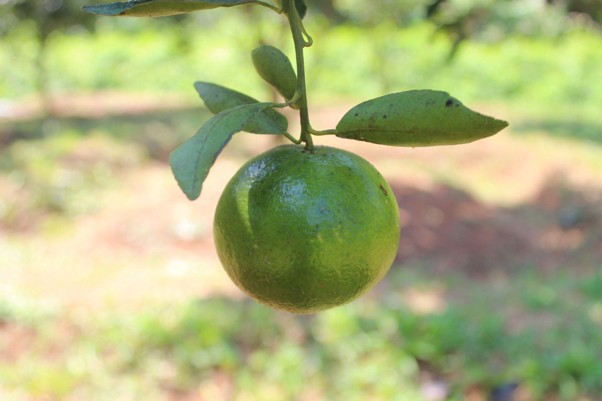
Citrus was chosen as the orchard's main crop because it offers strong economic potential, reaches production relatively quickly, and thrives in the local environment. More importantly, it provides students with the opportunity to observe every stage of fruit cultivation firsthand, from planting and routine maintenance to pest and disease management and harvesting. Over the years, the orchard has expanded to include a rich collection of citrus varieties, including Siam Madu, Santang, Nagami, Tongheng, Chokun, and Dekopon. Other fruit trees, such as avocado, durian, persimmon, pomegranate, Java guava, and breadfruit, have also been introduced, creating a diverse landscape that reflects the richness of tropical fruit cultivation.
For students, the orchard offers an entirely different learning experience from that of a conventional classroom. Practical sessions and research projects take place directly among the trees, allowing students to engage with real farming conditions and challenges. Courses on plant protection, pest and disease management, pesticide application technology, and fruit crop cultivation all make use of the orchard as an outdoor laboratory where theory naturally meets practice. At the same time, the orchard encourages students to see agriculture not only as a scientific discipline but also as a promising field for entrepreneurship. Through the concept of pick-your-own fruit agro-tourism, students gain valuable insight into how agricultural production can be transformed into sustainable business opportunities.
The orchard also serves as a place where research moves beyond the laboratory and into real agricultural practice. One of the Faculty's key research areas is the development of botanical pesticides as environmentally friendly alternatives to synthetic chemicals. For many years, the orchard has been managed without relying on conventional synthetic pesticides. Instead, researchers have developed and tested natural formulations made from vegetable oils, clove oil, neem, and selected mineral ingredients. These innovations help protect the trees while producing healthier fruit with lower pesticide residues, benefiting both consumers and the environment.
More importantly, the orchard demonstrates that meaningful research does not end with scientific publications. It comes to life when new ideas are tested in the field and create tangible benefits for farmers and society. The application of botanical pesticides at the orchard is one example of how university research can support more sustainable farming while making scientific innovation accessible beyond the campus.
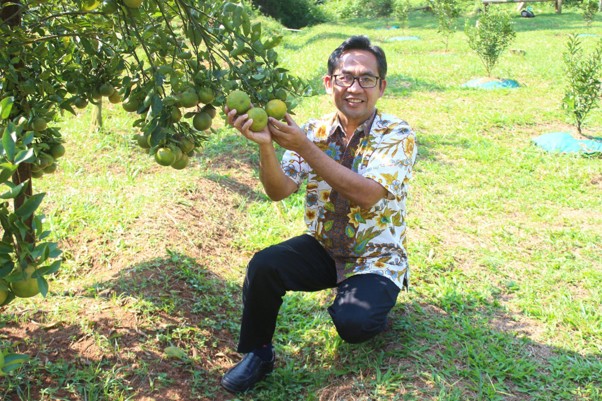
The orchard reached an important milestone with its first major harvest, marking the successful transformation of previously unproductive land into a thriving fruit-growing area. Since then, harvests have continued year after year, with production increasing as more trees mature. This steady progress reflects how research-driven management can create an agricultural system that is both productive and environmentally responsible.
Looking ahead, the area is envisioned to become an integrated agricultural learning hub. In line with this vision, the name "Eco Edu Park" aptly reflects its future role. Beyond expanding fruit cultivation, the site will also serve as a center for seedling production, crop cultivation training, organic farming education, and integrated pest management (IPM) programs. It will also support the rearing of both honey bees (Apis spp.) and stingless bees, whose pollination services are essential for improving fruit production. The integration of fruit crops and beekeeping is expected to enhance crop productivity while generating value-added products such as honey, royal jelly, bee bread, and propolis. At the same time, supporting facilities including plant nurseries, agricultural product outlets, educational amenities, and an Unit Usaha Akademik (UUA), will further strengthen the park's role as both a learning center and a collaborative space connecting the university with the wider community. More importantly, Eco Edu Park is expected to inspire and attract prospective students, particularly young people interested in agriculture, to pursue their studies at the Faculty of Agriculture and, more broadly, at Universitas Padjadjaran. For these reasons, preserving and continuously developing Eco Edu Park is essential to ensuring its long-term contribution to agricultural education, innovation, and community engagement.
More than simply a fruit orchard, the Ciparanje Eco Edu Park Citrus Orchard illustrates how an open landscape can become a place where education, research, and community service grow side by side. From land that once lay unused has emerged a vibrant learning environment that benefits students, researchers, and the wider community alike. The orchard reminds us that agriculture is about far more than producing fruit. It is also about cultivating knowledge, nurturing innovation, and creating opportunities that can improve people's lives. Through hands-on learning, sustainable farming practices, environmentally friendly technologies, and strong collaboration between the university and the community, the Ciparanje Eco Edu Park Citrus Orchard contributes to the Sustainable Development Goals (SDGs), particularly SDG 2 (Zero Hunger), SDG 3 (Good Health and Well-being), SDG 4 (Quality Education), SDG 8 (Decent Work and Economic Growth), SDG 12 (Responsible Consumption and Production), SDG 15 (Life on Land), and SDG 17 (Partnerships for the Goals). More importantly, it stands as a living example of how universities can help build a more sustainable future, one that brings together education, environmental stewardship, innovation, and community empowerment. Eco Edu Park Ciparanje turut mendukung pencapaian Sustainable Development Goals (SDGs), khususnya SDG 2 (Zero hunger) , SDG 3 (good health and well being), SDG 4 (Quality Education), SDG 8 (Decent Work and Economic Growth), SDG 12 (Responsible Consumption and Production), SDG 15 (Life on Land), dan SDG 17 (Partnerships for the Goals). Dengan demikian, keberadaan kebun ini tidak hanya bernilai akademik, tetapi juga menjadi contoh pengembangan pertanian berkelanjutan yang mampu mengintegrasikan aspek pendidikan, lingkungan, dan pemberdayaan masyarakat.





 English
  Indonesian