
Penulis: Nuraini Fitri Aribah & Syifa Djuita Putri
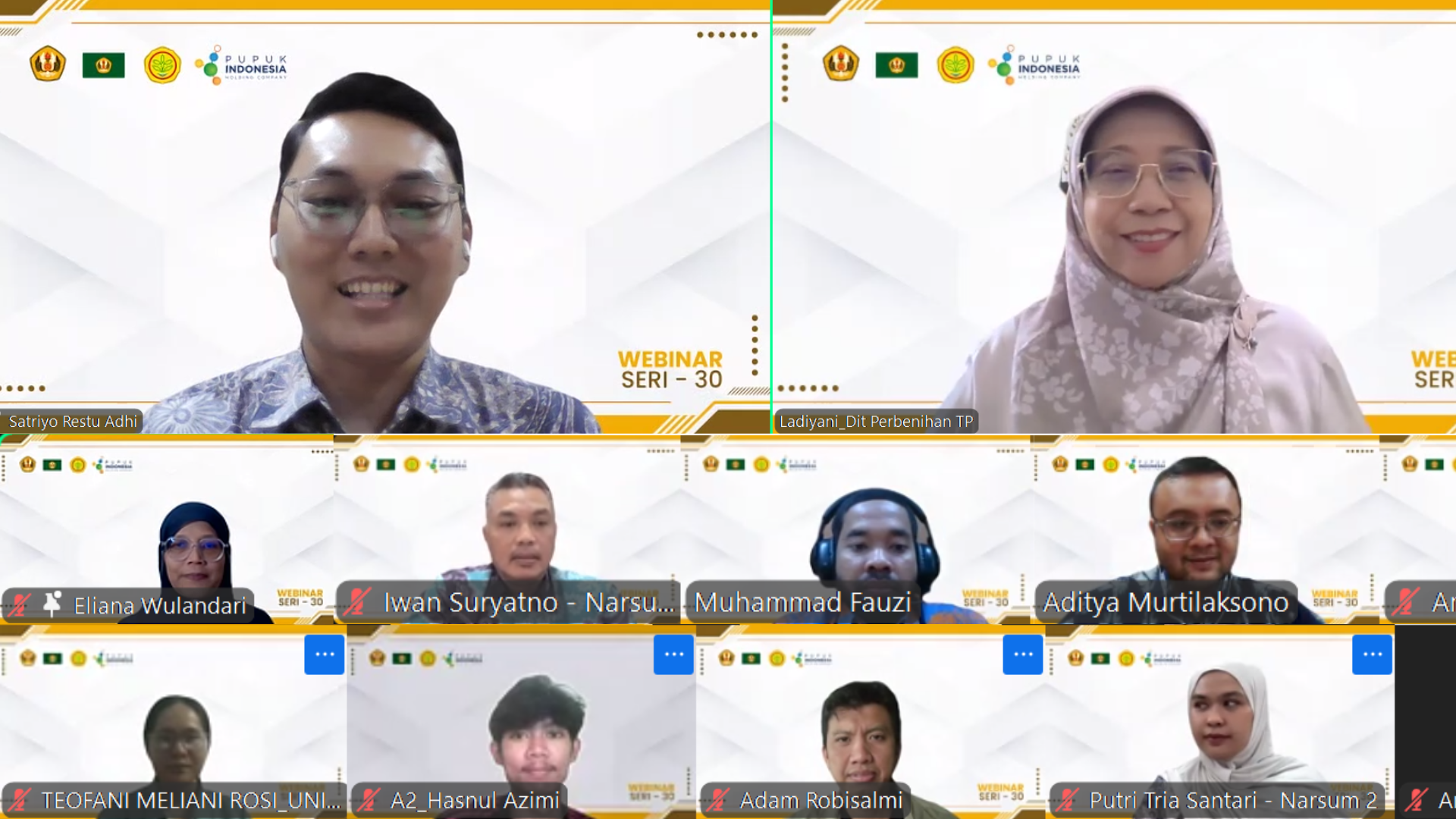
Jatinangor, 11 April 2026 – The Doctoral Program in Agricultural Science, Faculty of Agriculture, Universitas Padjadjaran, once again organized a national webinar entitled “THE SOIL RENAISSANCE: Reviving Degraded Lands.” The event was conducted online via Zoom on Saturday, 11 April 2026, featuring distinguished speakers from various national agricultural institutions. The webinar aimed to serve as a platform for knowledge exchange among industry practitioners, academics, and students regarding more productive and efficient agricultural land management to support food security. The discussion emphasized the importance of technological innovation and sustainable approaches in improving soil fertility through targeted management strategies to optimize land use for food production.
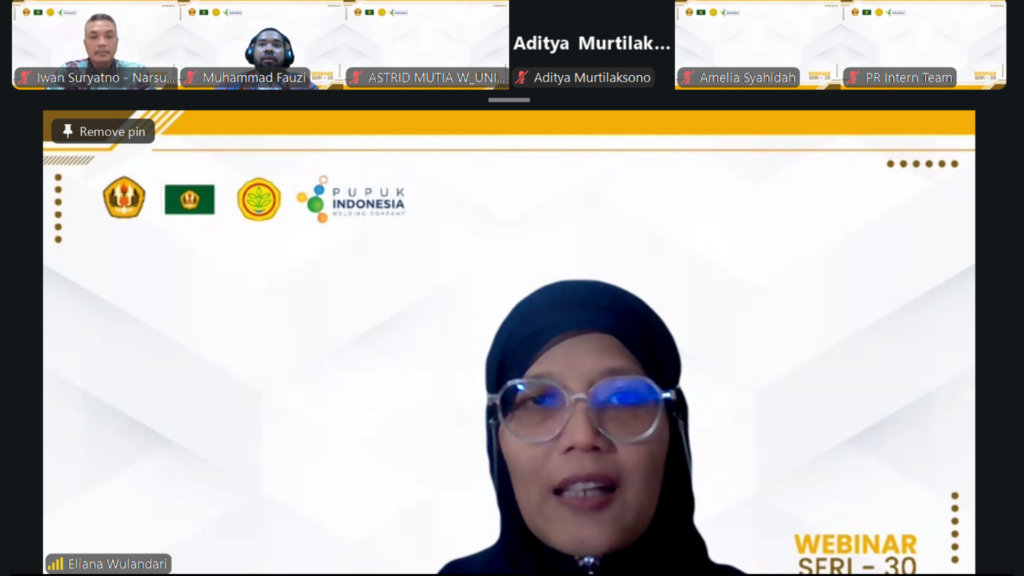
The event was officially opened by Prof. Dr. Eliana Wulandari, S.P., M.M., Head of the Doctoral Program in Agricultural Science, Faculty of Agriculture, Universitas Padjadjaran. In her opening remarks, she expressed sincere appreciation to all contributors and highlighted the significance of the webinar in addressing critical issues related to Indonesia’s future food security. She emphasized that the topic carries substantial urgency and relevance in the current agricultural context. This perspective was reinforced by the keynote speaker, Dr. Ir. Ladiyani Retno Widowati, M.Sc., from the Directorate of Food Crop Seed Development, Ministry of Agriculture, who stated, “Soil is the source of life. Therefore, efforts to enhance the productivity of marginal lands for food crops are essential.”
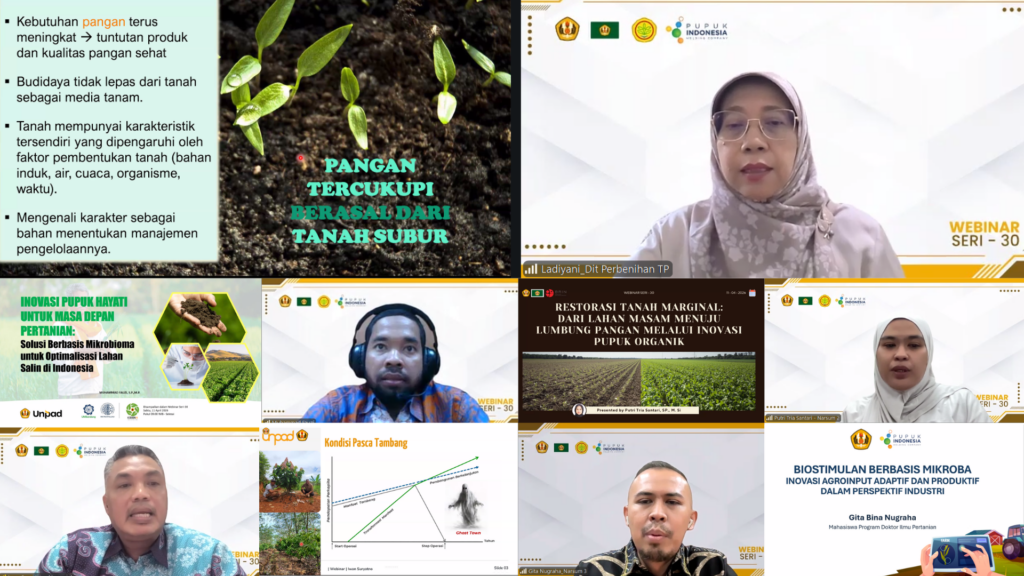
The webinar also featured several prominent speakers from diverse institutions, providing comprehensive perspectives from academia, research, industry, and field implementation. Muhammad Fauzi, S.P., M.P., a Biotechnology lecturer from Universitas Muhammadiyah Bandung, highlighted the importance of microbiome-based biofertilizer innovation as a strategic solution for optimizing saline land in Indonesia, emphasizing the role of microorganisms in enhancing nutrient-use efficiency. Meanwhile, Putri Tria Santari, S.P., M.Si., a researcher from the National Research and Innovation Agency (BRIN), underscored the urgency of restoring marginal soils—particularly acidic soils—through innovative organic fertilizer approaches that improve the chemical, physical, and biological properties of soil in a sustainable manner.
From an industry perspective, Gita Bina Nugraha, S.Si., M.Si., Head of the Indonesia Agrichemical Research Institute at PT Pupuk Indonesia (Persero), explained that the development of microbe-based biostimulants must go beyond discovery and be designed, prepared, and implemented adaptively according to field conditions to function effectively as agents for rehabilitating marginal and suboptimal lands. Meanwhile, Iwan Suryatno, S.Hut., M.Agr., Head of Permit & Government Relations at PT Pesona Khatulistiwa Nusantara (ENM Group), expanded the discussion into the socio-ecological domain by presenting strategies for post-mining community transformation toward self-sufficiency. He emphasized the importance of integrating land restoration efforts with community economic empowerment as part of a holistic sustainable development system. This webinar served not only as a platform for knowledge dissemination but also as a forum for dialogue that brought together diverse perspectives on marginal land management. The activity is expected to encourage the development of applicable innovations and strengthen collaboration among stakeholders. For students, the forum provides a foundation for building critical and evidence-based thinking, while for practitioners and researchers, it highlights the importance of technologies that are adaptive to Indonesia’s agroecosystems. More broadly, the themes discussed align with the Sustainable Development Goals (SDGs), particularly SDG 2 (Zero Hunger), SDG 13 (Climate Action), and SDG 15 (Life on Land). In this context, the restoration of marginal lands becomes a tangible contribution toward achieving sustainable and competitive agricultural development.
 English
  Indonesian