
Author: Nuraini Fitri Aribah
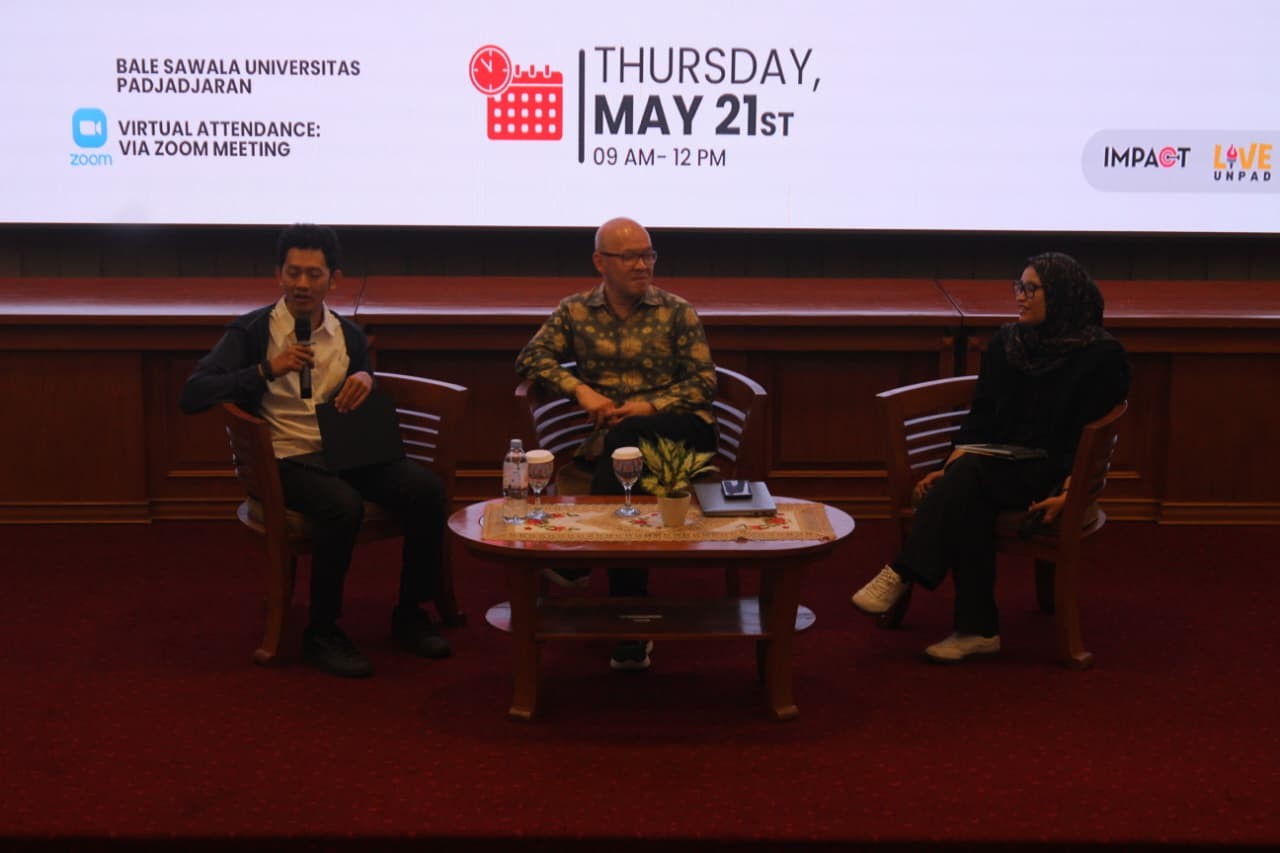
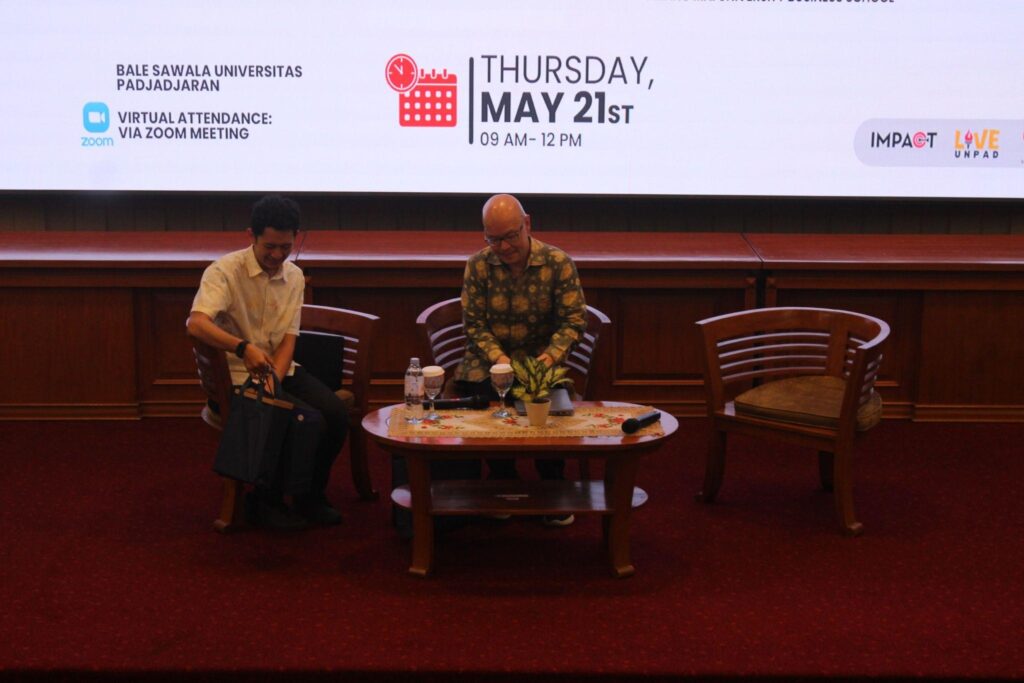
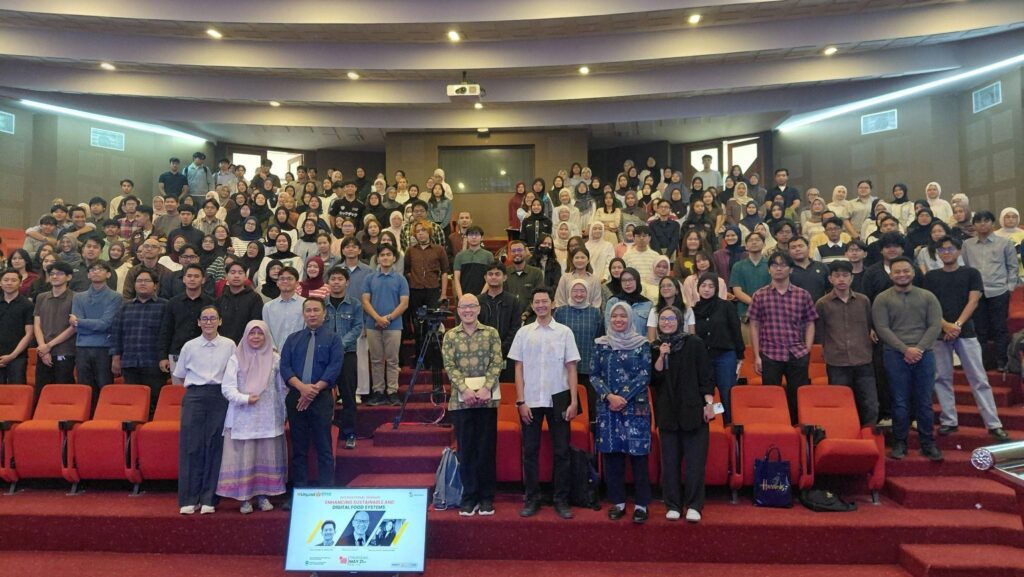
Jatinangor, May 21, 2026 — Issues surrounding digital transformation and sustainable food systems took center stage at the “International Seminar on Enhancing Sustainable and Digital Food Systems”, organized by the Faculty of Agriculture, Universitas Padjadjaran, at Bale Sawala, Universitas Padjadjaran Rectorate Building, on Thursday (May 21). Held in a hybrid format, the international seminar featured three distinguished speakers — Assoc. Prof. Ferry Jie, Assoc. Prof. Ramadhona Saville, and Assoc. Prof. Dr. Koblarp Chandrasapth — and brought together academics, students, and practitioners from diverse backgrounds to discuss the future of more adaptive and sustainable global food systems.
In his opening remarks, Professor of the Agribusiness Study Program at the Faculty of Agriculture, Universitas Padjadjaran, Prof. Dr. Tomy Perdana, S.P., M.M., emphasized that the challenges facing global food systems cannot be addressed individually, but instead require collaboration across countries and academic disciplines. He stated that the seminar was not only intended as a platform for knowledge exchange, but also as a forum to foster meaningful partnerships toward global food sustainability. Echoing this statement, the Dean of the Faculty of Agriculture, Universitas Padjadjaran, Dr. Achmad Choibar Tridakusumah, S.P., M.P., reaffirmed the faculty’s commitment to supporting sustainable development through strengthening education, research, and innovation in food systems and agribusiness.
During the seminar sessions, Assoc. Prof. Ferry Jie discussed the digitalization of sustainable supply chains within the agribusiness sector. He explained that the concepts of Industry 5.0 and Society 5.0 position technology as a supportive tool that remains centered on human values and sustainability. Meanwhile, Assoc. Prof. Ramadhona Saville presented the advancement of agricultural digital transformation through real-time monitoring and predictive intelligence technologies. According to him, the use of digital sensors, machine learning, and artificial intelligence can help farmers improve productivity while reducing resource waste.
In one of her presentations, Assoc. Prof. Ramadhona Saville emphasized that data plays a crucial role in creating more adaptive, efficient, and sustainable food systems. According to her, the advancement of digital technology enables the agribusiness sector to make faster and more accurate decisions through the implementation of real-time monitoring and predictive intelligence. “Digital transformation through real-time monitoring and predictive intelligence can enhance the effectiveness and sustainability of agribusiness management,” she stated. She further explained that the use of digital sensors, machine learning, and artificial intelligence not only helps improve agricultural productivity, but also minimizes resource waste and reduces the risk of crop losses.
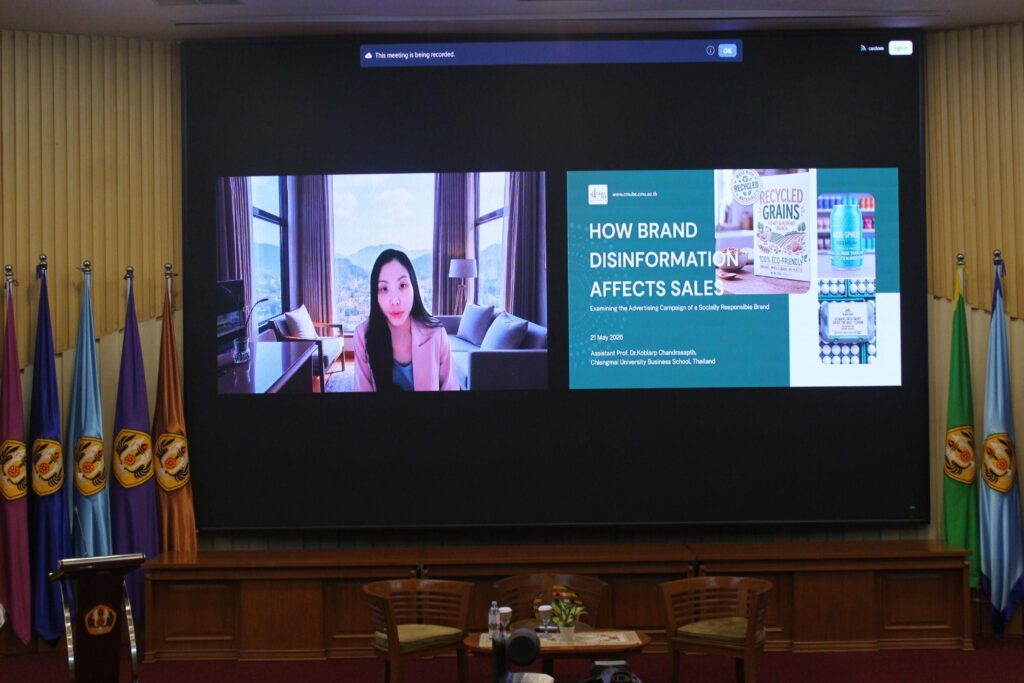
Meanwhile, Assoc. Prof. Dr. Koblarp Chandrasapth highlighted the importance of transparent, consistent, and fact-based sustainable brand communication in building consumer trust toward agribusiness products. According to her, modern consumers are becoming increasingly critical of environmental and sustainability issues when selecting products. Therefore, businesses need to communicate sustainability values authentically while avoiding greenwashing practices that may undermine the credibility of both products and companies. Through these discussions, the seminar also contributed to the implementation of the Sustainable Development Goals (SDGs), particularly SDG 2 (Zero Hunger), SDG 9 (Industry, Innovation, and Infrastructure), SDG 12 (Responsible Consumption and Production), SDG 13 (Climate Action), and SDG 17 (Partnerships for the Goals). These contributions were reflected through the promotion of digital-based innovation, the development of more efficient and environmentally sustainable food systems, and the strengthening of international collaboration among academics, researchers, and practitioners from various countries. Beyond serving as a platform for knowledge exchange, the seminar was also expected to encourage strategic partnerships and innovative ideas in addressing global challenges within the food and agribusiness sectors. Through the spirit of collaboration and innovation, the event became part of a collective effort to build a more resilient, inclusive, and sustainable future for global food systems.
 English
  Indonesian