
Author: Nuraini Fitri Aribah
Jatinangor, May 29, 2026 — The increasing attack of the Coffee Berry Borer (CBB), scientifically known as Hypothenemus hampei, has become a growing concern across coffee-producing regions in Indonesia, particularly in West Java. The pest, considered one of the most destructive threats to coffee plantations, is believed to be becoming more aggressive due to climate change and shifting environmental conditions in plantation areas. Dr. Yani Maharani, S.P., M.Si., a lecturer at the Agrotechnology Study Program, Faculty of Agriculture, Universitas Padjadjaran (Unpad), explained that the Coffee Berry Borer damages coffee cherries by boring into the fruit, leading to significant declines in both the quality and quantity of coffee yields. The damage directly affects the market value of coffee, especially for export commodities.
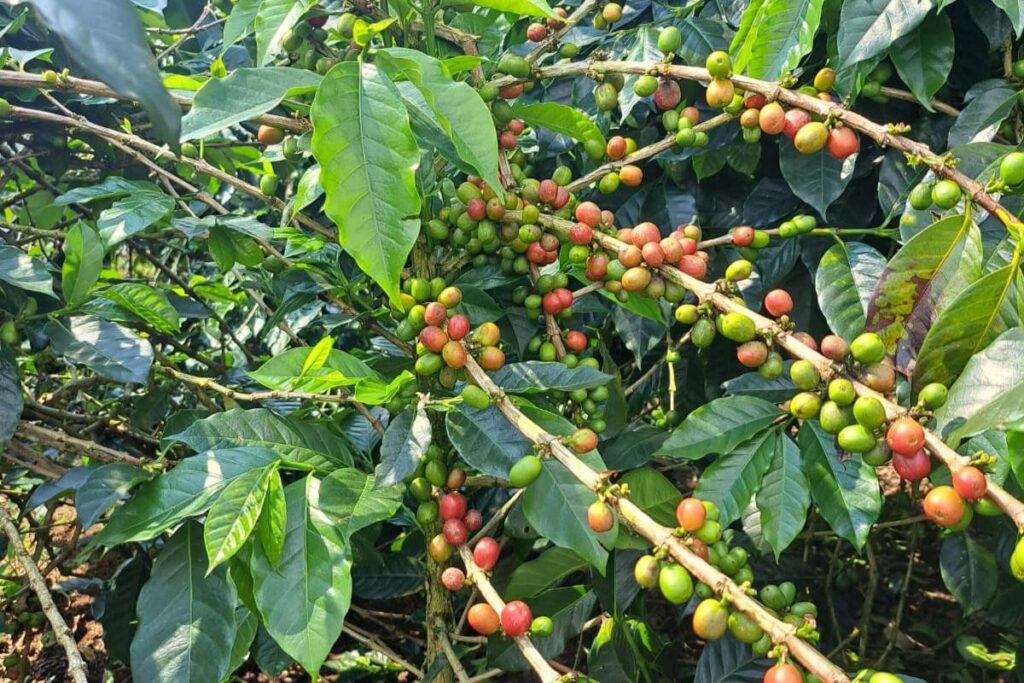
“In the past, the Coffee Berry Borer primarily attacked ripe red coffee cherries. Now, we are increasingly finding infestations in green, immature cherries as well. This indicates a shift in pest behavior and an increase in its aggressiveness,” she said.
Through her ongoing research, Dr. Yani identified climate change as one of the major factors contributing to the increasing aggressiveness of the pest in several coffee plantation areas. Rising temperatures accelerate the insect’s life cycle, increasing reproductive rates and causing rapid population growth in the field. The condition is considered a serious threat to coffee productivity and crop quality, prompting the need for more adaptive and environmentally friendly pest management strategies to suppress the spread of the Coffee Berry Borer amid ongoing climate change.
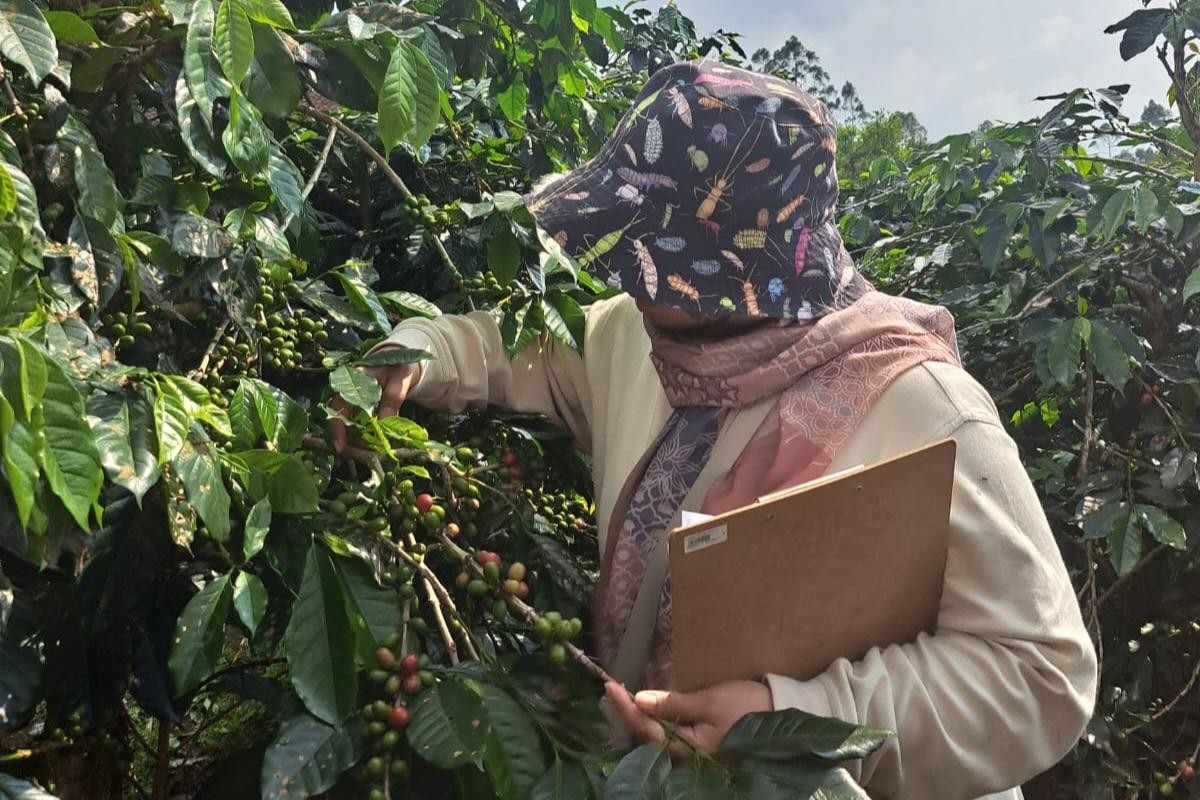
The research, which has been conducted since 2023, covers several coffee-producing regions in West Java, including Pangandaran, Ciamis, Sumedang, Bogor, Bandung Regency, and Garut. The research team observed both Robusta and Arabica coffee plantations across various agroecosystems and elevation levels. Preliminary findings indicate that Coffee Berry Borer infestations tend to be more severe in plantations located in open areas or near residential settlements compared to coffee farms managed under agroforestry systems. The presence of shade trees and more natural environmental conditions is believed to help reduce pest attacks.
“Coffee plants located near residential areas or coffee processing facilities are more vulnerable to Coffee Berry Borer attacks than those grown within agroforestry systems,” she explained. She added that human activities around settlements and coffee processing areas may also influence the pest’s population dynamics. Carbon emissions generated from activities in these areas are suspected to contribute to environmental conditions favorable for the pest.
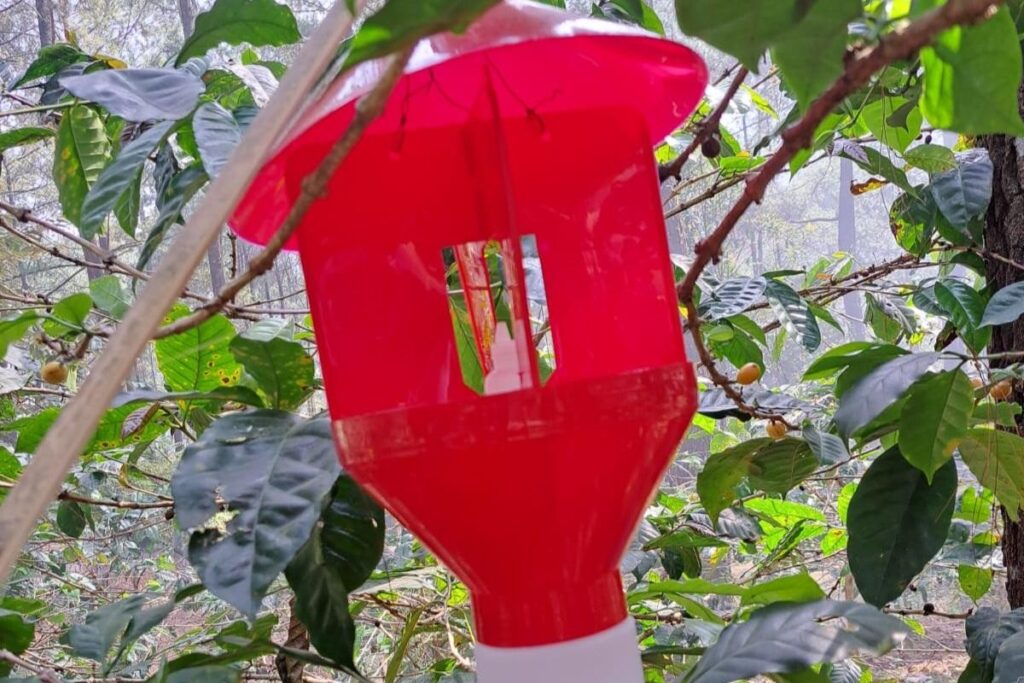
In the continuation of the research in 2026, the team will focus on developing Coffee Berry Borer control strategies using traps with various color variations. Currently, most traps commonly use red as the primary attractant color, but the latest study is testing the effectiveness of other colors in attracting the pest. “We are currently preparing prototype traps for both laboratory and field testing. We hope to identify a control strategy that is more effective and practical for farmers,” she stated.
In addition to trap-based control methods, the research also examines the potential use of natural enemies such as parasitoids as biological control agents. However, the relatively low number of parasitoids found in the field has led researchers to consider habitat engineering approaches as a more feasible alternative. The team is also exploring the use of refugia plants to attract beneficial insects capable of naturally suppressing Coffee Berry Borer populations and increasing pollinators presence to develop coffee productivity.
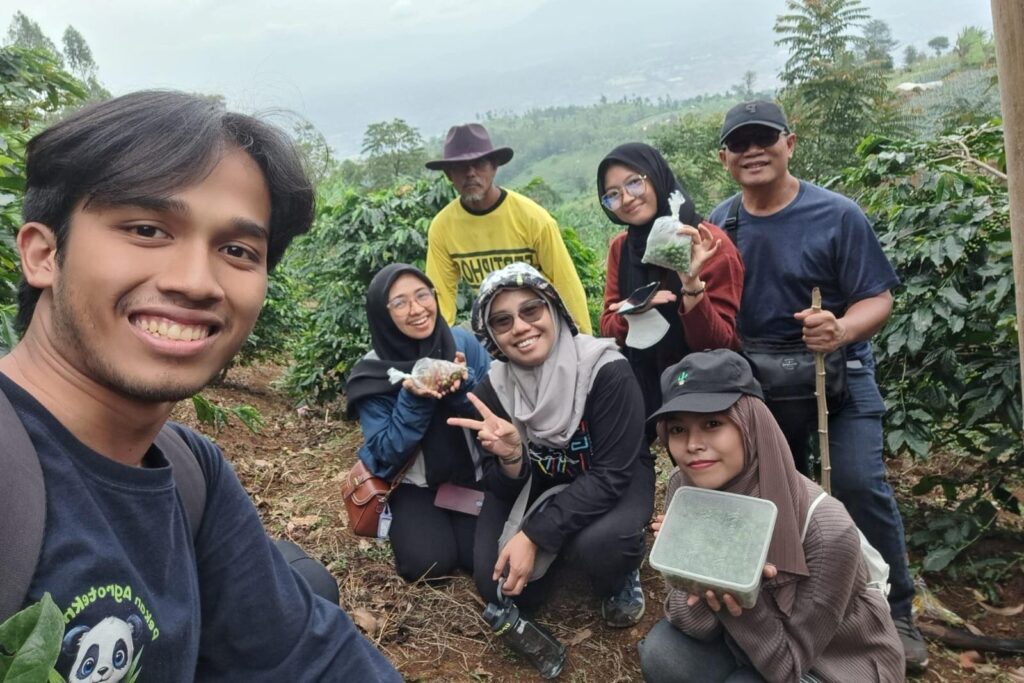
The research involves university students and is conducted in collaboration with researchers from the National Research and Innovation Agency (BRIN) and IPB University. The collaboration includes laboratory analysis, data analysis and the development of further studies. Through this research, Dr. Yani hopes to uncover the underlying causes behind the increasing infestation of immature coffee cherries while developing pest control strategies that are effective, practical, and easily adopted by farmers. “We hope the outcomes of this research will be truly applicable and help farmers control the Coffee Berry Borer so that coffee productivity in West Java can be maintained,” she concluded.
The development of environmentally friendly Coffee Berry Borer control strategies is expected not only to safeguard national coffee productivity but also to support sustainable agricultural practices amid the challenges posed by climate change. The research aligns with the Sustainable Development Goals (SDGs), particularly SDG 2 (Zero Hunger), SDG 12 (Responsible Consumption and Production) and SDG 13 (Climate Action), through efforts to strengthen more adaptive and sustainable agricultural systems.

 English
  Indonesian