
Author: Nuraini Fitri Aribah
Jatinangor, June 8, 2026 — Indonesia’s heavy reliance on imported soybeans remains a major challenge for the country’s agricultural sector. In response to this issue, the Faculty of Agriculture at Universitas Padjadjaran (Unpad) is developing a microbe-based biofertilizer technology aimed at improving soybean productivity on degraded agricultural land.
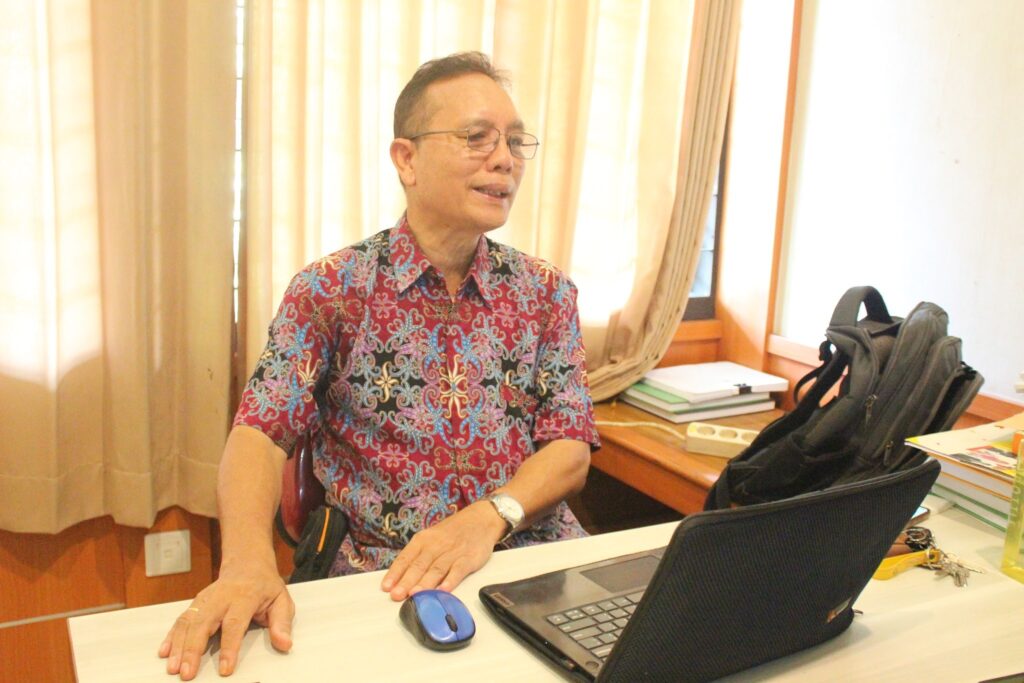
The research, led by Prof. Dr. Ir. Tualar Simarmata, M.S., a professor at Unpad’s Faculty of Agriculture, is part of the Magister to Doctoral Program for Outstanding Graduates (PMDSU), which has been running since 2023. The study focuses on utilizing superior microbial strains to support the growth of both black and yellow soybeans in low-fertility soils.
According to Prof. Tualar, biofertilizer development offers a promising solution to address Indonesia’s low soybean productivity while simultaneously improving the quality of degraded agricultural land. “Soybeans are not only an important food commodity but also a crop that can help restore soil health. Therefore, biofertilizer technology provides dual benefits by increasing production while improving soil quality,” he said.
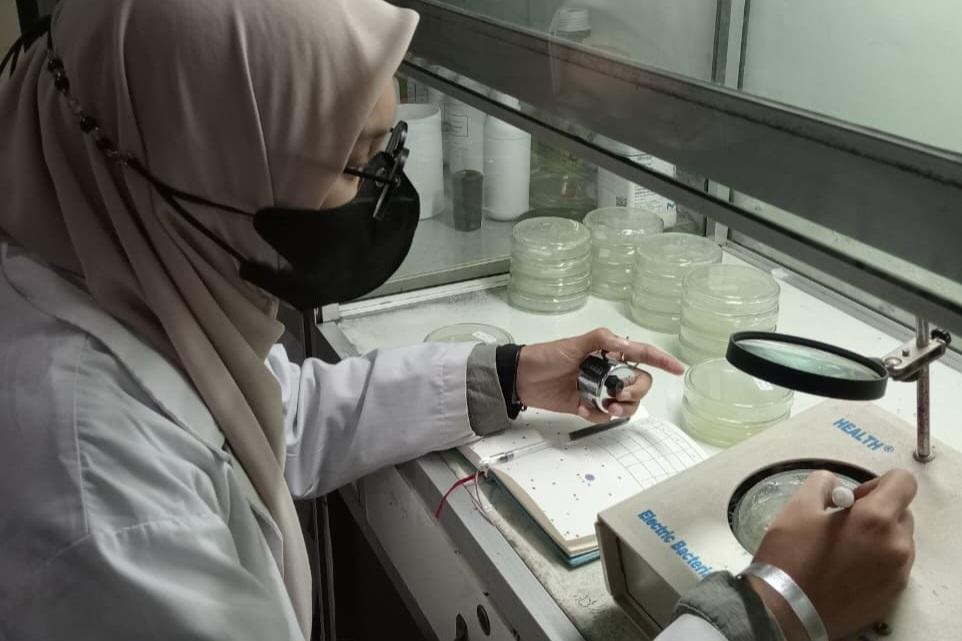
As part of the study, the research team has isolated and selected microbial strains from various extreme environments, including saline coastal soils and acidic soils that represent marginal agricultural land commonly found in Indonesia. These microbes are then tested for their ability to survive under harsh conditions while supporting soybean growth.
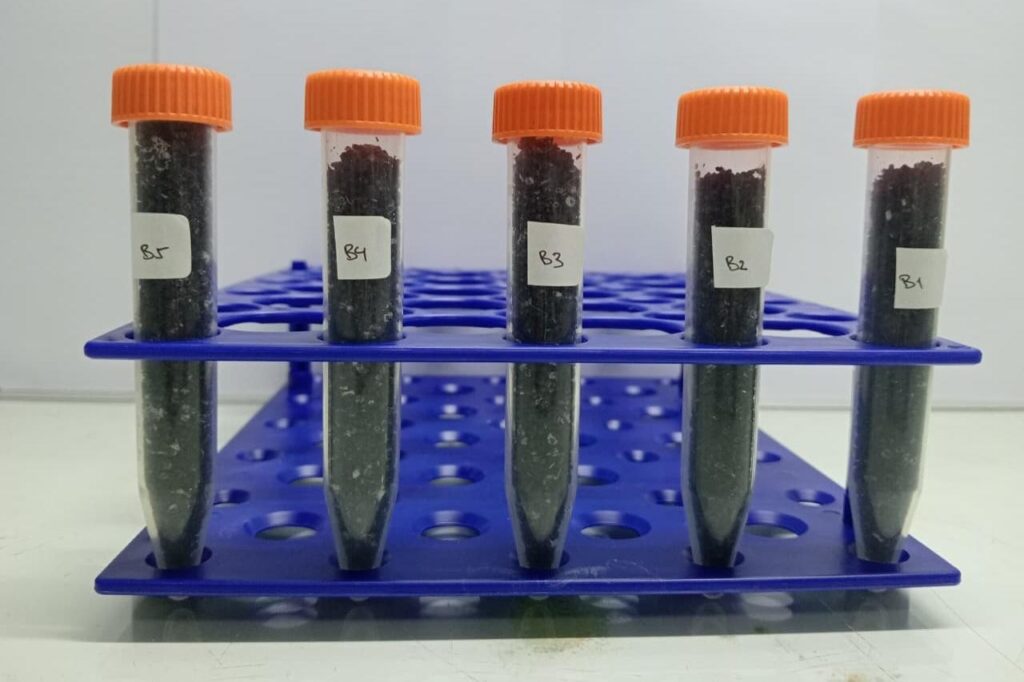
Selected microbial strains are formulated into both liquid and solid biofertilizers using encapsulation technology to enhance their viability and effectiveness in the field. In addition to nitrogen-fixing bacteria such as Bradyrhizobium, the research also employs Plant Growth-Promoting Rhizobacteria (PGPR) to improve nutrient-use efficiency and overall soil health.
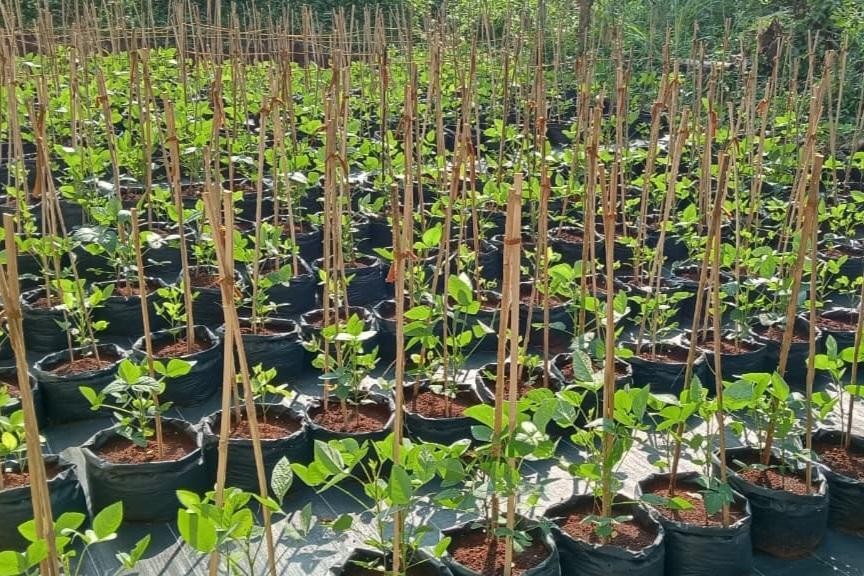
The team is also developing bioameliorants that combine biochar, compost, and beneficial microorganisms to accelerate the rehabilitation of degraded land and promote sustainable soil fertility improvement. Now entering its third year, the research has reached the final stage of field trials. One of the testing sites is the Ciparanje Experimental Farm at Universitas Padjadjaran. Preliminary findings indicate that the technology has significant potential to enhance soybean growth while reducing dependence on chemical fertilizers.
Prof. Tualar explained that one of the project’s primary objectives is to improve nitrogen fertilizer-use efficiency, a critical component in soybean cultivation. “If this technology can be widely adopted, nitrogen fertilizer use could potentially be reduced by more than 75 percent. This would not only lower production costs for farmers but also provide substantial environmental benefits,” he said.
In addition to producing scientific publications, the research is expected to generate patents and technological innovations with practical applications for the agricultural sector. Prof. Tualar noted that increasing soybean productivity is a strategic step toward reducing Indonesia’s dependence on imports, considering that approximately 80 percent of the country’s soybean demand is still met through imports.
Therefore, the development of biofertilizer and bioameliorant technologies is intended not only to increase crop yields but also to support the restoration of degraded land and strengthen national food security. This locally based microbial innovation is expected to provide a productive, environmentally friendly, and farmer-friendly solution for sustainable agriculture. The research also contributes to the achievement of the Sustainable Development Goals (SDGs), particularly SDG 2 (Zero Hunger), SDG 12 (Responsible Consumption and Production), and SDG 15 (Life on Land) through efforts to enhance agricultural productivity, reduce dependence on synthetic chemical inputs, and promote the sustainable management and rehabilitation of degraded land resources.
 English
  Indonesian