
Students’ Active Participation in Driving Sustainable Land Management Transformation in Bandung Regency
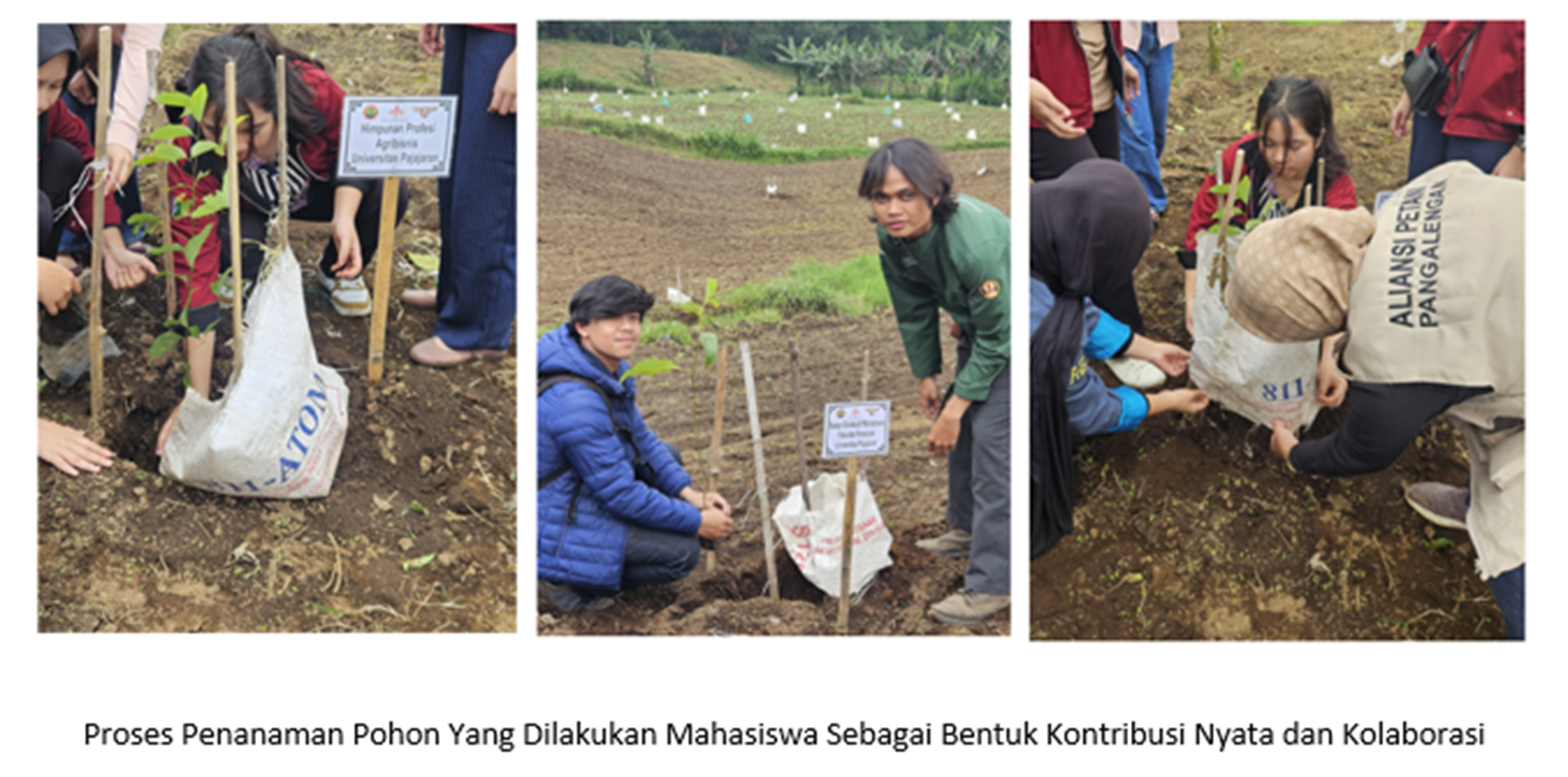
As a concrete implementation of the "Tridarma" (the Three Pillars of Higher Education) in community service, a student delegation participated in a massive initiative to plant 100,000 trees in Pangalengan, Bandung Regency, on Wednesday (Feb 11). This student involvement served as a vital educational milestone, highlighting the critical link between equitable land management and national food security.
During the forum, Agustiana, the Secretary-General of the Pasundan Peasant Union (SPP), provided a critical educational perspective on the root causes of environmental issues in West Java. He emphasized that poverty and environmental degradation are not merely technical phenomena but are direct consequences of unequal land ownership structures. Students were encouraged to understand that granting farmers fair access to land is the fundamental cornerstone of sustainable food independence.
Student participation in this event is expected to shift the public paradigm regarding the causes of natural disasters. Historically, smallholder farmers have often been blamed for forest degradation. However, field data suggests that disaster-prone areas are frequently located within large-scale industrial forest concessions rather than community-managed lands. In this context, students serve as an information bridge to socialize the importance of honest collaboration between government policies and the aspirations of local farmers.
"Students must become strategic partners for both farmers and the government in formulating preventive—rather than merely reactive—disaster mitigation strategies," Agustiana stated. Through this educational approach, students are expected to look beyond the classroom, engaging directly with agrarian conflicts to provide innovative solutions for more equitable land management in the future.
The planting of thousands of trees symbolizes a multi-dimensional collaboration between the government, activists, farmers, and academics. With strong synergy, the goal is to create a resilient agricultural ecosystem. Students hold a crucial role in monitoring government policies to ensure they remain pro-people, ensuring that West Java grows not only ecologically strong but also economically empowered through the active participation of local farmers.
This activity is ultimately not just an ecological action, but a real manifestation of achieving various Sustainable Development Goals (SDGs) in an integrated manner. The active participation of students in strengthening agrarian governance contributes directly to SDG 2 (Zero Hunger) through empowering local farmers for national food security. Additionally, the collaboration in tree planting supports SDG 13 (Climate Action) by maintaining environmental carrying capacity to prevent disasters. Through synergy between academics, farmers, and the government, this initiative emphasizes the importance of SDG 17 (Partnerships for the Goals) as a key factor in building a more just, prosperous, and resilient West Java sustainably.
 English
  Indonesian