
The Faculty of Agriculture (FoA), Universitas Padjadjaran (Faperta Unpad), continues to promote international academic exposure for its students through various global mobility initiatives. One of these efforts was realized through the participation of graduate students in a student mobility program at Tokai University, Japan. student mobility di Tokai University, Jepang.
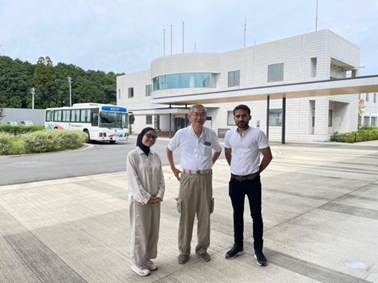
In September 2025, two graduate students from Faperta Unpad—Rara Rahmatika Risanti (Doctoral Program in Agricultural Sciences) and Usama Yaseen (Foreign Students from Pakistan, study at Master’s Program in Soil Science)—took part in a one-month academic exchange as visiting graduate students at Tokai University, Aso–Kumamoto Rinku Campus, Japan. Usama Yaseen is an international student from Pakistan currently pursuing his master’s degree at the Faculty of Agriculture, Universitas Padjadjaran.
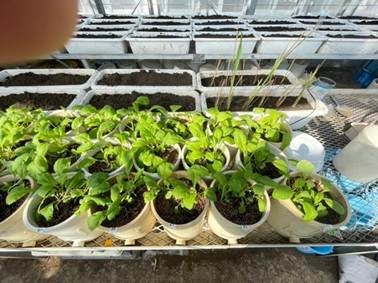
The program was conducted under the supervision of Prof. Dr. Jun Abe from the Faculty of Agriculture, Laboratory of Crop Science, Tokai University. It forms part of the academic collaboration initiative between Universitas Padjadjaran and Tokai University in the field of agricultural sciences. During the program, the students actively engaged in laboratory research activities. One of the research projects carried out was entitled “The Effects of Bacillus spp. Bacteria on the Growth of Cruciferous Vegetables” The study focused on evaluating the role of Bacillus spp. bacteria as plant growth-promoting rhizobacteria (PGPR) in enhancing the vegetative growth of cruciferous vegetable crops.
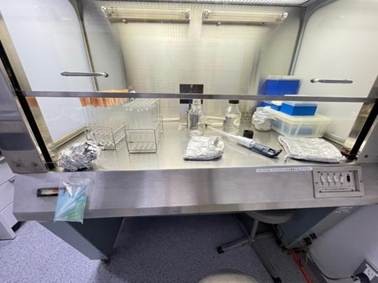
The research activities included several experimental stages, such as preparation of materials and experimental design, bacterial inoculation procedures, plant maintenance under controlled research conditions, systematic observation of plant growth parameters, and preliminary data analysis. Data collection focused on vegetative growth indicators, which were subsequently analyzed statistically to assess the effectiveness of the bacterial treatments in promoting plant growth.
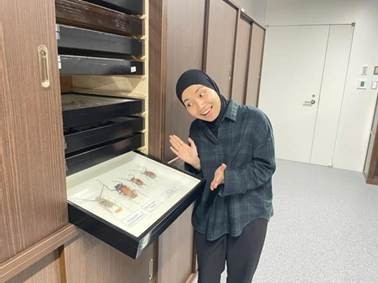
In addition to laboratory work, the students also participated in laboratory meetings, scientific discussions, and academic exchanges with faculty members and graduate students at Tokai University. These interactions provided valuable opportunities to deepen their understanding of plant–microbe interactions while gaining experience within an international research environment.
Beyond academic activities, the program also offered opportunities for the students to experience Japanese culture and explore the city of Kumamoto and the surrounding campus environment. These experiences helped broaden cross-cultural perspectives while strengthening international academic networks between Universitas Padjadjaran students and the scientific community at Tokai University, Japan. Overall, this visiting research program represents a concrete step in the Faculty of Agriculture Universitas Padjadjaran’s commitment to supporting the internationalization of higher education and expanding global academic engagement for its students.
 English
  Indonesian