
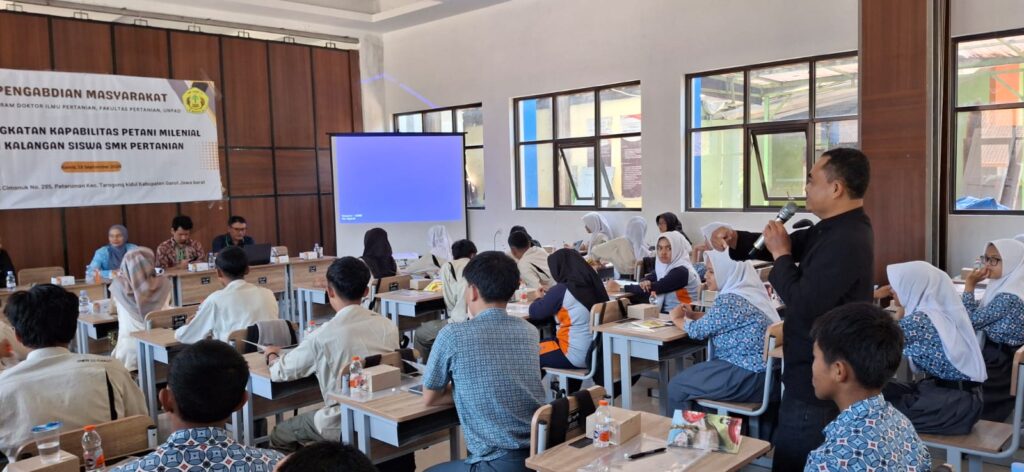
The increasing marginalization of farming as a primary livelihood, coupled with the shrinking of agricultural land in Indonesia, presents a significant challenge. The Tri Dharma of Higher Education emphasizes the obligation of universities to conduct education, research, and community service (PKM). These three pillars are vital for both academic and societal development, including in the agricultural sector. This has motivated doctoral students in agricultural sciences at Padjadjaran University (UNPAD) to carry out their social responsibility through a PKM activity. The goal is to enhance the capabilities of millennial farmers and encourage young people to be more enthusiastic about advancing the agricultural world, including developing entrepreneurship.
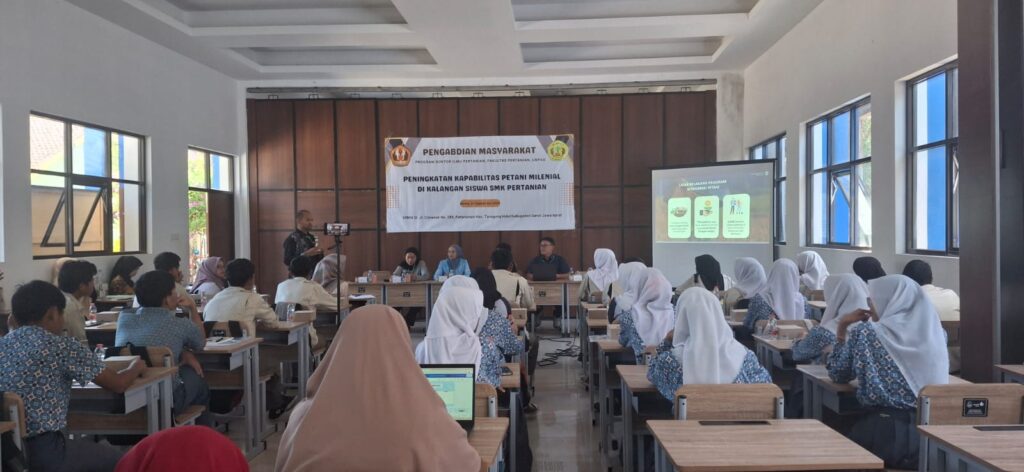
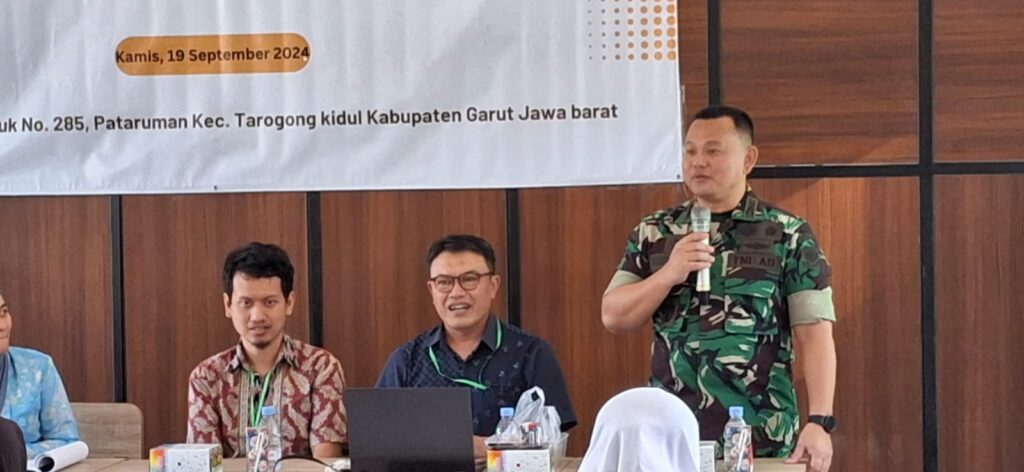
Vocational schools in agriculture play a crucial role in producing innovative millennial farmers who can adapt to modern developments. One of the locations for this doctoral student PKM was SMKN 12 Garut, where the event was held on Thursday, September 19, 2024. This vocational school has a leading program in Agribusiness of Food Crops and Horticulture. This agribusiness major combines business, management, and other relevant sciences to drive agricultural enterprises, offering a suitable solution for the modern agricultural sector. Students and teachers from this department participated in and benefited from the activity. It is hoped that participants will improve their skills in technology, agricultural management, and innovation, thereby creating a generation of competent millennial farmers ready to face modern agricultural challenges.
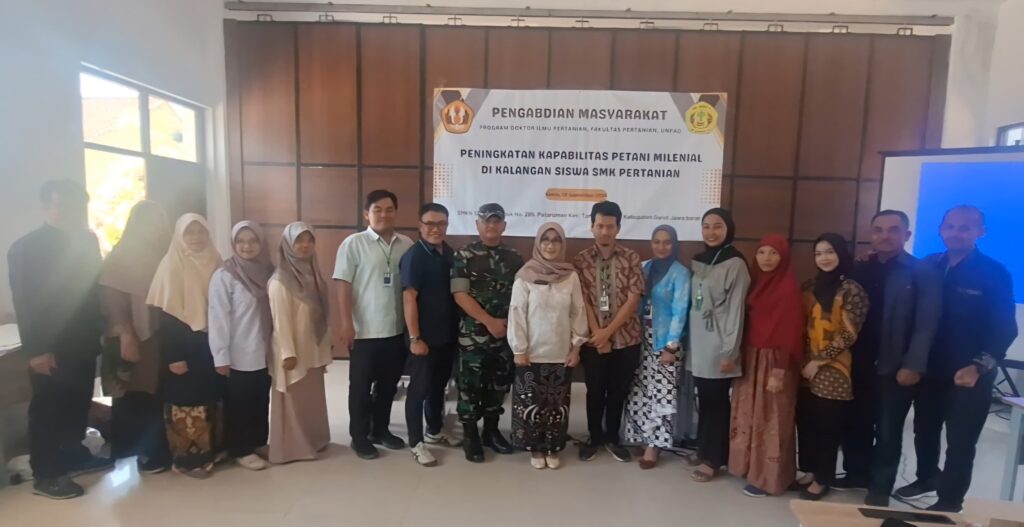
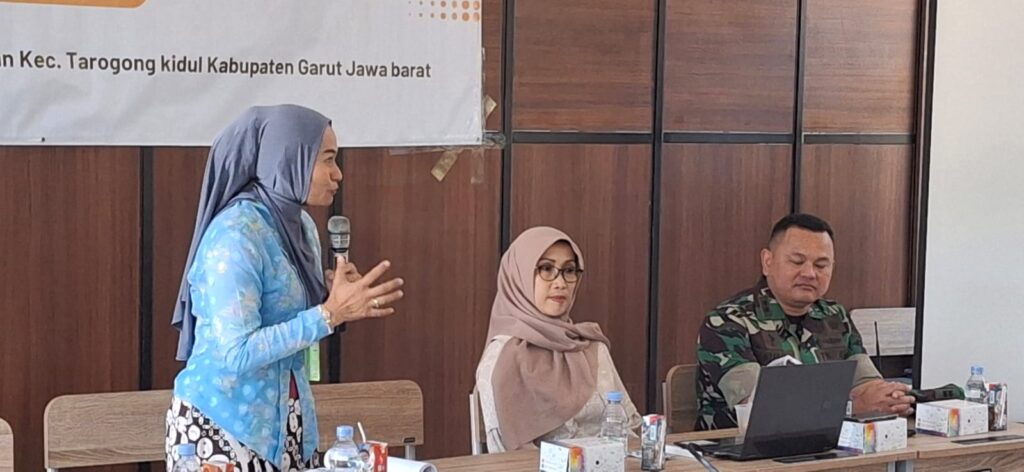
The event, moderated by Sheila Zallesa M.I.L, a lecturer from the Faculty of Fisheries and Marine Sciences (FPIK) at Padjadjaran University, featured eight doctoral students from various disciplines and professions who took turns presenting material. The topics covered organic farming, agricultural technology innovation, success stories of millennial farmers, motivation for increasing the capacity of young farmers, and entrepreneurship. The first session was delivered by Nailil Hana S.Pi. M.P., a civil servant at the West Java Provincial Department of Marine and Fisheries who is also a doctoral student in Agricultural Sciences. She spoke about the importance of a young entrepreneurial spirit in the fisheries and agricultural sectors. The second session was presented by Fitri Kurniawati, S.P., M.I.L, a researcher at the National Research and Innovation Agency (BRIN)'s Center for Ecology and Ethnobiology, who explained how to make bio-fertilizers and bio-pesticides while also motivating young people to not be ashamed of farming. The third session was by Diky Indrawibawa S.P., M.Agr, CEO of Bumi Agro Technology, who shared tips on becoming a successful farmer-entrepreneur. Additionally, supplementary material was provided by Moh Haris Imron M.Tr. P (Researcher at the Center for Intelligent Mechatronics), Ana Frasipa, S.P., M.Si (Lecturer in Agribusiness at Universitas Subang), and Nirwikara Widhiwidhana S.P., M.Agr on the importance of higher education for young people in the agricultural sector. Letkol. Inf Hamzah Budi Susanto S.E., M.I.P, Chief of Staff of Korem 062 Tarumanegara, also had the opportunity to share the role and experience of the Indonesian National Armed Forces (TNI) in achieving food security through various programs, including "healthy kitchens," "kitchens entering schools," and various community guidance and empowerment programs.
The Head of SMKN 12 Garut, Hj. Enden Lesmanawati, S.Pd., M.Pd., gave a positive response to the PKM activity carried out by the UNPAD S3 Agricultural Sciences students. She stated that the event provided great motivation for students to see the potential of the agricultural field and expanded their knowledge of agricultural research and technology. This collaboration also encouraged students to pursue higher education and get involved in agricultural innovation. Hj. Enden hopes that the collaboration with the UNPAD Faculty of Agriculture can continue and is not limited to a short visit. She wishes for more sustainable programs, such as research assistance, agricultural technology training, and agribusiness entrepreneurship coaching, so that students are better prepared to face the challenges of the agricultural workforce.
Through this PKM activity, it is hoped that a sustainable synergy will be created between the world of education and the agricultural sector, giving rise to a generation of millennial farmers who not only understand technology and management but are also able to innovate and adapt to changing times. The active involvement of doctoral students in providing material and supporting the development of young entrepreneurs in the agricultural sector shows the importance of collaboration between academics, students, and the community in building the future of Indonesian agriculture. This program is expected to be a significant first step in strengthening the role of agriculture as a vital pillar of the economy and community well-being.


 English
  Indonesian