
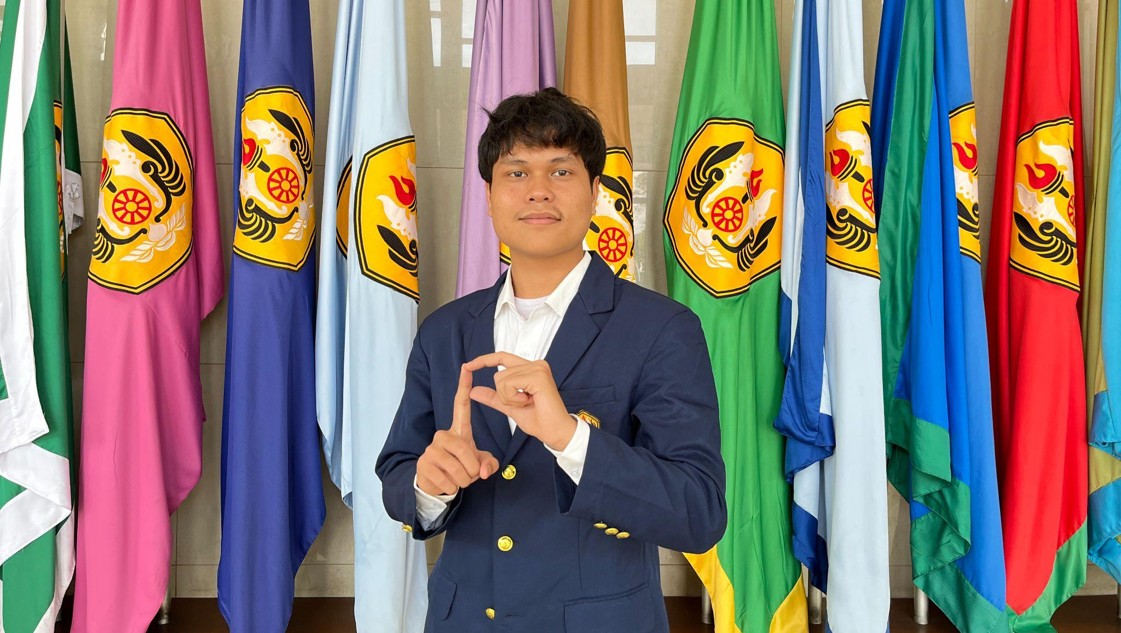
Taking the Initiative to Serve: The Story of Dellpati Al Musawwir Nasution, a First-Year Faperta Unpad Student Who Became a Genera-Z Finalist
Author: Syifa Djuita Putri
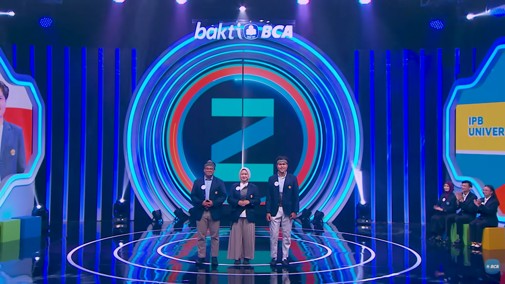
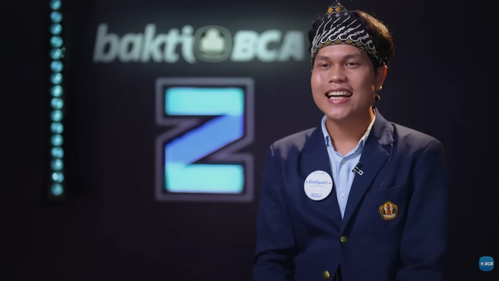
Jatinangor, July 10, 2026 – For many university students, community service is often seen as something to pursue only in the later stages of their academic journey. However, Dellpati Al Musawwir Nasution, a 2025 student of the Faculty of Agriculture at Universitas Padjadjaran, has challenged this notion by advancing to the final round of Genera-Z, a program that encourages young people to create meaningful impact through innovation and community engagement.
Behind his achievement is a journey filled with challenges. Growing up in a family with limited financial resources, Dellpati learned to see education as a way to build a better future. His greatest inspiration came from his father, whose hard work, perseverance, and willingness to help others shaped the values he holds today. Those lessons have influenced the way he sees his role as a university student, not only to study and achieve academic success, but also to make a meaningful contribution to society.
Amid the demands of being a first-year student, Dellpati chose not to wait for opportunities to come to him. For him, being a university student is not only about achieving academic excellence but also about making a positive contribution to society from the very beginning of higher education.
"Community service should not be limited to final-year students. We can all take the initiative and move ahead. There are families we want to make proud, people who need inspiration to stay resilient, and friends who continue to support us, motivating us to give our very best," he said.
This mindset became his primary motivation throughout his Genera-Z journey. According to Dellpati, preparing for the competition required more than technical skills; it demanded strong commitment and perseverance. Managing time amidst academic responsibilities, sacrificing rest, and maintaining consistency were all essential parts of the process.
"Time, dedication, and sometimes even sacrificing sleep became part of this journey. Most importantly, we must have a champion’s mindset and be able to maintain it until the very end," he explained.
However, the path to the final stage was far from easy. One of the greatest challenges was maintaining team cohesion while balancing academic obligations with competition preparations. On one hand, coursework and academic logbooks needed to be completed; on the other hand, pitching materials for the community service project had to be prepared thoroughly.
These challenges ultimately became valuable learning experiences. Throughout the program, Dellpati experienced significant growth in his communication skills. He emphasized that presenting ideas to different audiences requires clarity, structure, and precision, as everyone has their own perspectives and ways of understanding information.
More than just a competition, Genera-Z taught him that every major achievement is built through a long and demanding process.
"Great results are never achieved through small efforts alone. I also believe that failure is part of the key to success. All the hard work behind the scenes remains unseen until the spotlight finally arrives," he remarked.
Among all the activities he participated in, the most memorable moments were those spent working closely with his teammates, including staying overnight together to complete preparations before the judging session. Traveling to Jakarta for the final judging process also marked his first experience staying in a hotel. Behind those exciting experiences were countless unseen efforts, ranging from administrative preparations to securing financial support for transportation. These experiences strengthened the team's solidarity and taught them the true meaning of perseverance.
Dellpati also expressed his appreciation to the Dean’s Office of the Faculty of Agriculture, Universitas Padjadjaran, for the support provided to his team throughout the Genera-Z program. As a first-year student, he considered this support a significant source of encouragement.
Furthermore, Dellpati shared advice for students interested in participating in future Genera-Z programs. He emphasized the importance of building a team whose members complement and support one another’s strengths. He also encouraged prospective participants to stay updated through Genera-Z’s official social media channels, develop a problem-solving mindset, be prepared to engage with the complexities of community life, and most importantly, possess a genuine commitment to serving society.
For Dellpati, Genera-Z has proven that meaningful contributions are not determined by age or academic standing. Instead, the courage to start early can become a powerful foundation for creating lasting impact.
This spirit aligns with Universitas Padjadjaran’s commitment to supporting the achievement of the Sustainable Development Goals (SDGs), particularly SDG 4 (Quality Education) through the development of students’ competencies beyond the classroom, SDG 10 (Reduced Inequalities) through inclusive community empowerment, SDG 11 (Sustainable Cities and Communities) through strengthening youth participation in community development, and SDG 17 (Partnerships for the Goals) by emphasizing collaboration among students, higher education institutions, and society in advancing sustainable development. Through Genera-Z, students not only learn to become scholars but are also prepared to become agents of change capable of delivering tangible solutions to societal challenges.






 English
  Indonesian